Intelligent Trip Classification: Designing for Human-AI Collaboration

Intelligent Trip Classification: Designing for Human-AI Collaboration

Intelligent Trip
Classification: Leveraging AI to Optimize User Experience

Motus is the industry leader in the vehicle reimbursement space, accountable for tracking over 290M miles per month and disbursing $1.4B in reimbursements annually. The Motus app helps employees log and classify their business mileage for reimbursement, a process that historically required significant manual effort.

In this project, I led the design of an AI-powered Auto-Classification system, an intelligent layer that learns from driver behavior to distinguish business and personal trips automatically. While the interface itself was simple, the design challenge centered on how to bridge human workflows with machine intelligence in a way that increased trust, transparency, and ease of use.

Results

01. $10M+ in annualized customer savings across the client base

02. 40M miles per year in personal trips eliminated through smarter anomaly detection

03. 71% active user engagement with new classification workflows
PROBLEM STATEMENT & GOALS

PROBLEM STATEMENT & GOALS

PROBLEM STATEMENT & GOALS

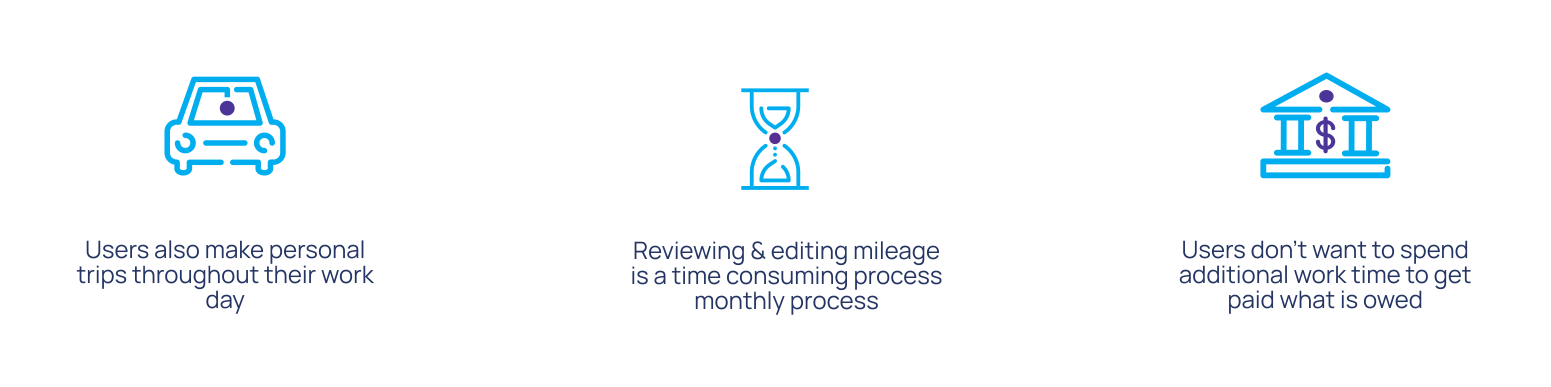
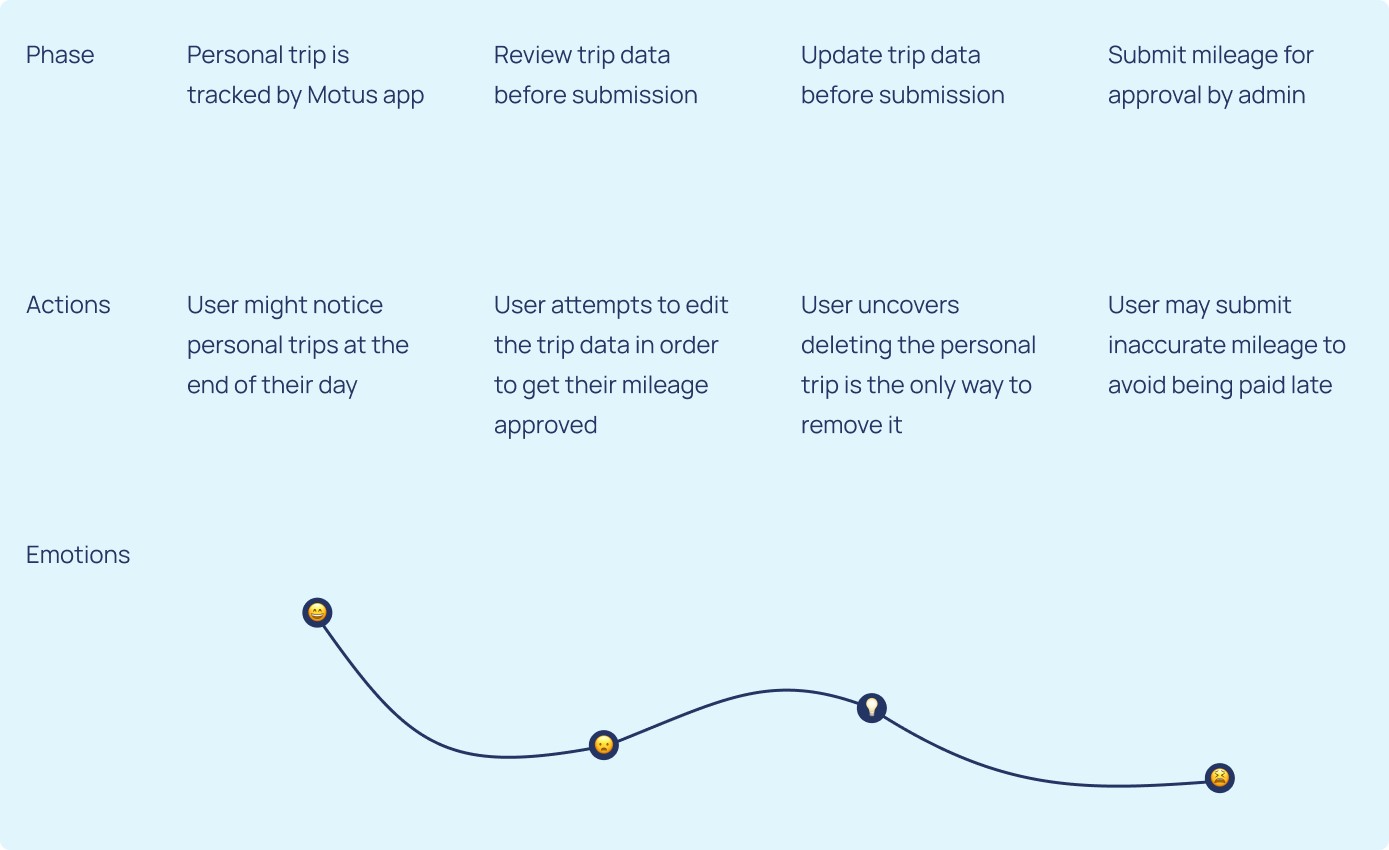
Our users do more than complete business trips during their business day. They may drop off their kids, run an errand, or grab lunch between meetings. The Motus app historically tracked all trips the same way, requiring users to manually review each one before submitting mileage for reimbursement by their employer.

Without a mechanism to distinguish between business and personal trips, the monthly process of reviewing mileage can be long and tedious for both drivers and approvers.

Our goal was to create an intelligent classification experience that leveraged machine learning to:

01. Recognize and predict patterns in driver behavior

02. Learn continuously from user corrections to improve accuracy over time

03. Reduce manual review time

RESEARCH

RESEARCH

RESEARCH

User Interviews
To understand current behaviors and frustrations, I conducted exploratory interviews with drivers across multiple industries — from healthcare to construction. We aimed to uncover when and how users switched between business and personal contexts during the day, and how they currently managed these transitions within the app.

Key Findings

01. Personal Trip Frequency: Personal trips are common, but the app offered no efficient way to manage them.

02. Time Cost: Users spent only 5–10 minutes reviewing trips weekly, leaving little time for detailed checks.

03. Cognitive Load: The current trip order and editing process caused confusion and additional review time.

These insights clarified that our design challenge wasn’t just about automation — it was about creating a collaborative experience between human intent and machine prediction.

Key Findings

01. Personal Trip Validity: Users are making personal trips throughout their business day and the current state of the app requires users to spend additional time managing their mileage or using workarounds to minimize time spent editing their trip data (i.e. manually enterred trips account for 14% of total trip types)

02. Trip Order: The current trip order is unintuitive and contributes to cognitive load for the user

03. Time Spent Reviewing: Users only spend around 5-10 minutes reviewing mileage before submitting to their employers and only 30% of users check their app weekly 

DESIGN PROCESS

DESIGN PROCESS

DESIGN PROCESS

Following research, our team proposed a multi-phase approach that would allow machine learning to gradually assist users to address the observed pain points. By eliminating the tedious and manual experience, the app will continue to align with the Motus "set and forget" branding. To facilitate the design and execution of the 2024 roadmap, we divided the work into three distinct capabilities.

Capabilities
01. Location Manager: Enable users to manage and classify their frequent locations — providing structured data for the model to learn from.

02. Auto Trip Classification: Introduce automated classification based on behavioral patterns and location metadata.

03. Needs Review Feed: Create a feedback loop that surfaces uncertain trips for user review, closing the learning loop.

Following the research conducted, our team decided to incorporate Trip Classification functionality to address the observed pain points and align with industry standards. However, our approach distinguishes itself through the implementation of Auto-Classification which will empower drivers to automatically assign business and personal classifications to their frequent locations. By eliminating the tedious and manual experience, the app will continue to align with the Motus "set and forget" branding.


Initiatives
To facilitate the design and execution of the 2024 roadmap, we divided the work into three distinct initiatives:

01. Location Manager: new interface empowering users to manage both their favorite and company-provided locations. Within Location Manager users can associate classifications at the location level, which the app will utilize for the Auto-Classification of trips.

02. Auto Trip Classification: feature enabling users to classify trips as business or personal and Auto-Classify trips based on the classification of their favorite locations.

03. Needs Review Feed: dedicated section in the app designed to prompt users to update trips that require review.

Following the research conducted, our team decided to incorporate Trip Classification functionality to address the observed pain points and align with industry standards. However, our approach distinguishes itself through the implementation of Auto-Classification which will empower drivers to automatically assign business and personal classifications to their frequent locations. By eliminating the tedious and manual experience, the app will continue to align with the Motus "set and forget" branding.


Initiatives
To facilitate the design and execution of the 2024 roadmap, we divided the work into three distinct initiatives:

01. Location Manager: new interface empowering users to manage both their favorite and company-provided locations. Within Location Manager users can associate classifications at the location level, which the app will utilize for the Auto-Classification of trips.

02. Auto Trip Classification: feature enabling users to classify trips as business or personal and Auto-Classify trips based on the classification of their favorite locations.

03. Needs Review Feed: dedicated section in the app designed to prompt users to update trips that require review.


Initiative 01. Location Manager

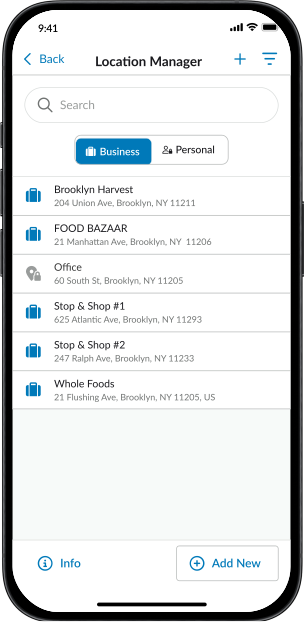
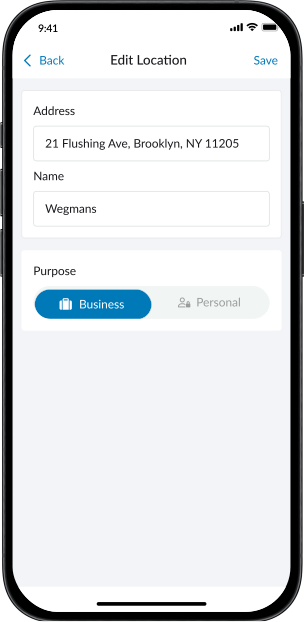
Our initial focus of development was on Location Manager interface, chosen for its ability to deliver standalone value as quickly as possible. This work was not only a dependency for future work, but also served as valuable training for upcoming functionality. Users will have the ability to manage their frequent locations and assign a classification (Business or Personal). Prior to this interface, users no control over this data that could only be updated in the back-end. 

Enhanced Button Placement: Implemented a strategically placed plus button at the bottom right of the screen. This decision was made to enhance affordance, as the plus sign on the top right of existing screens may not be as visible to users. Additionally, it will be easier for right-handed users.
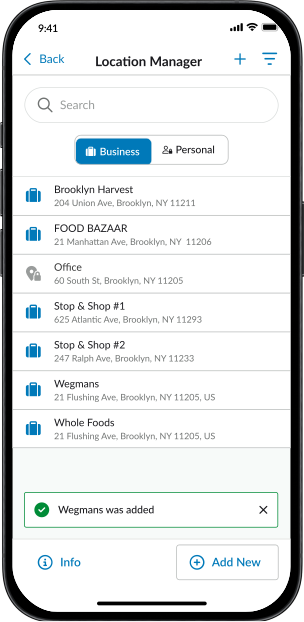
Notification for Successful Actions: Introduced a notification when a location is successfully added or updated. This notification is part of a broader strategy to implement across the app to highlight and acknowledge successful user actions like editing or adding a manual trip. 

Auto Trip Classification: Most importantly, manaaging these locations will enable the system to get smarter progressively and reduce the need for user intervention over time and increasing submission accuracy.

01. Location Manager

Our initial focus of development was on Location Manager interface, chosen for its ability to deliver standalone value as quickly as possible. It allowed users to label and manage frequent locations, associating each with a business or personal classification. Prior to this interface, users no control over this data that could only be updated in the back-end. 

Why it matters:
Every user classification effectively became training data for the algorithm, helping it learn location-based context and reduce future misclassifications.

Design Highlights:

  • Enhanced Button Placement: Moved the “add” action to a bottom-right floating button to improve visibility and reachability.

  • Feedback Notifications: Added confirmation to highlight successful updates — reinforcing trust in automation.

  • Progressive Learning: Each saved location improved the system’s accuracy over time, reducing the need for future user input.

Initiative 01. Location Manager

Our initial focus of development was on Location Manager interface, chosen for its ability to deliver standalone value as quickly as possible. This work was not only a dependency for future work, but also served as valuable training for upcoming functionality. Users will have the ability to manage their frequent locations and assign a classification (Business or Personal). Prior to this interface, users no control over this data that could only be updated in the back-end. 


02. Auto Trip Classification
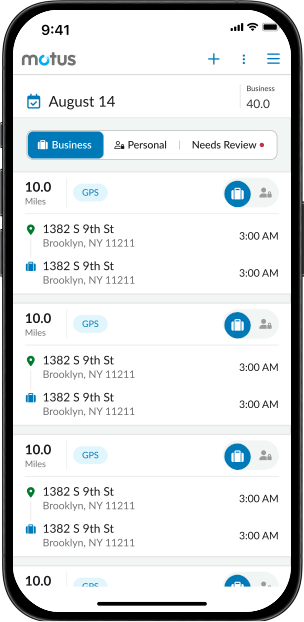
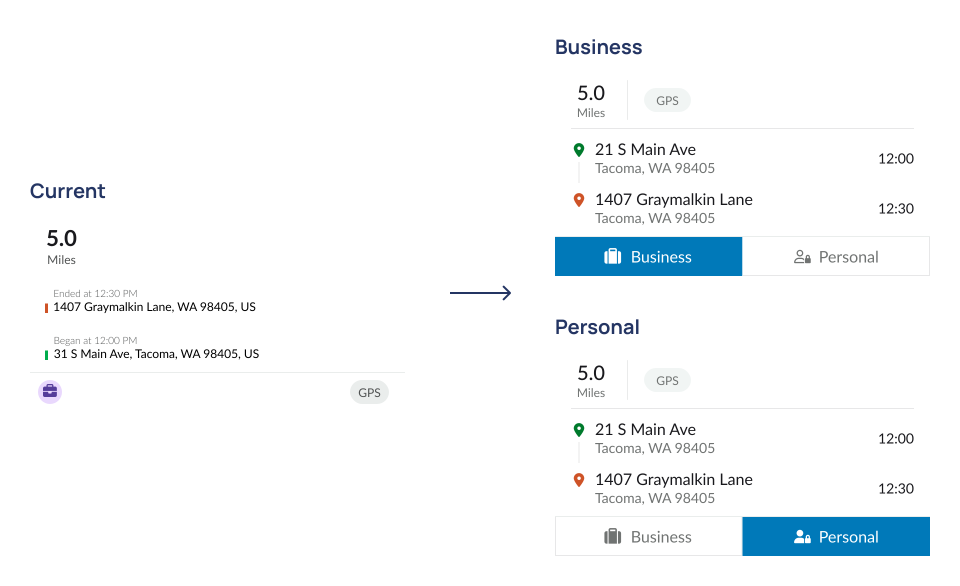
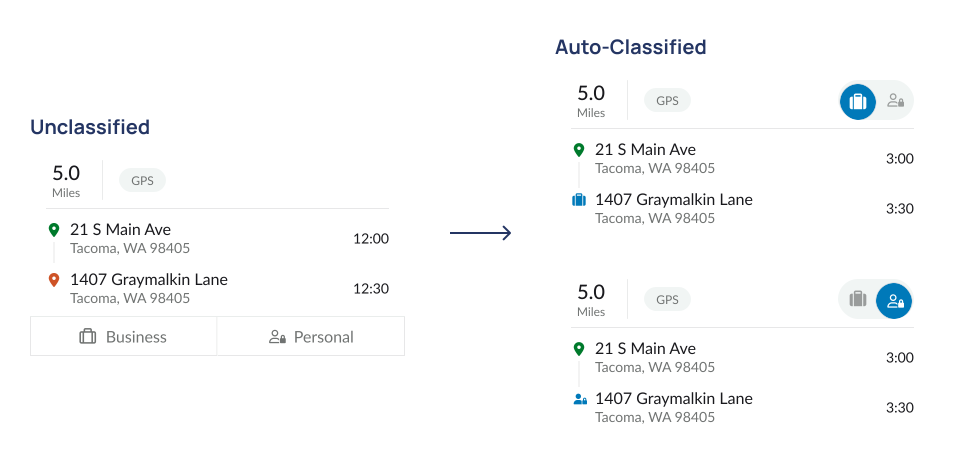
The introduction of Auto Trip Classification provided an opportunity to redesign the trip card based on user feedback, making it more intuitive, logically ordered, and enhancing the scanability of trip data.

Behind the scenes:
The ML model analyzed driver trip data — such as frequent routes, time of day, and past classifications — to predict trip type. Each user correction fed back into the model, allowing it to improve its accuracy for both the individual and similar driver profiles.

Trip Card V1

Initiative 02. Auto Trip Classification
The introduction of Auto Trip Classification presented a great opportunity to redesign the trip card based on user feedback.

Trip Card V1

Design Improvements:

  • Optimized Trip Order: Simplified the trip card to display a logical start-to-end flow.

  • Classification Toggle: Added a clear business/personal toggle, nudging users to interact with the new functionality

Trip Card V1

Trip Card V2

Streamlined Auto-Classified Card: Once the model reached high confidence, the toggle was minimized to reduce clutter, but remained editable for transparency.
Initiative 03. Needs Review Feed

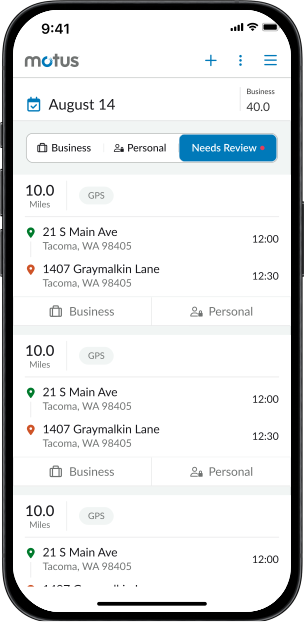
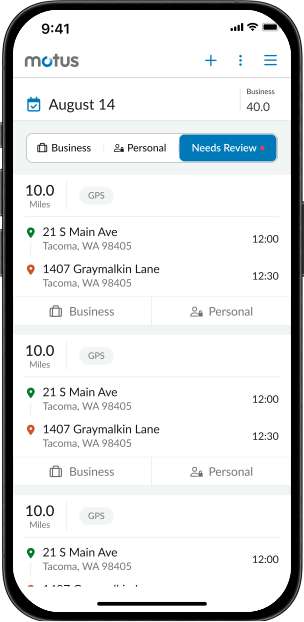
When a user arrives at a new address that is not stored in Location Manager, the app will not be able to auto-classify the trip, requiring users to manually classify the trip. As a result, we needed to introduce a dedicated section in the app to draw attention to trips requiring user action. The visibility of this feed is essential for adoption of Auto Trip Classification and more accurate submission.

Trip Card V2

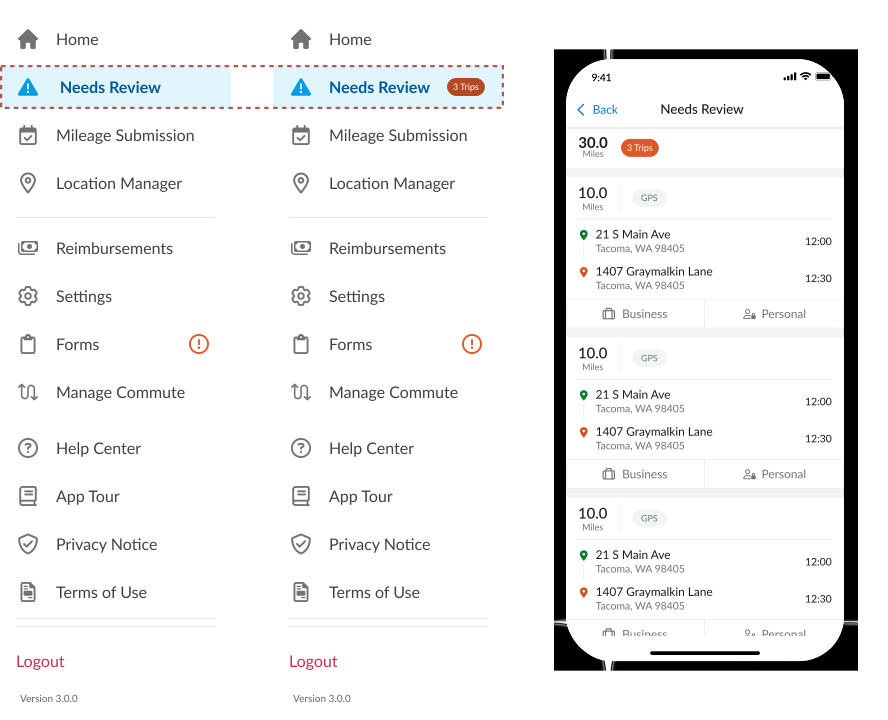
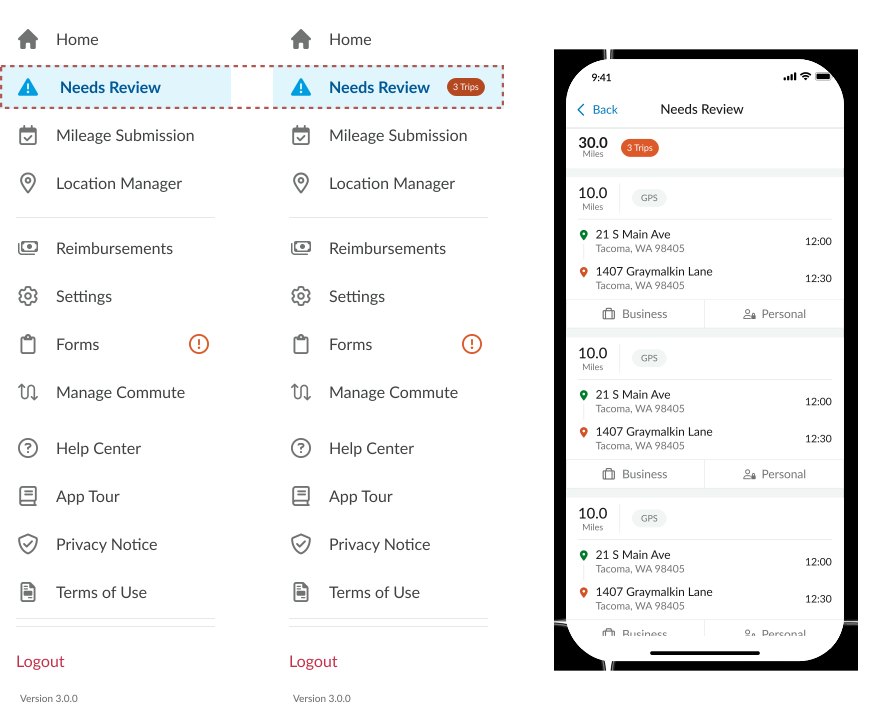
Option 1: Add New Section to Side Nav

Dedicated Feed: Our initial approach was to create a distinct feed, completely separate from the current home screen, to prominently feature trips that require user action.
Badge: Finally, we implemented an indicator with a badge to clearly convey the count of trips requiring user review. This badge was added to the header, and an identical one was incorporated into the sidebar, ensuring users are aware of the need for review and the corresponding quantity.

03. Needs Review Feed

When the model encountered uncertainty — for example, a new location or irregular trip pattern — the trip needed to be surfaced to the user for review.

Therefore, this was not just a new UI feature, but it required a human-in-the-loop feedback system. The way we designed this feature was essential for the adoption of Auto Classification so users could quickly confirm or correct classifications and train the underlying model with minimal friction.

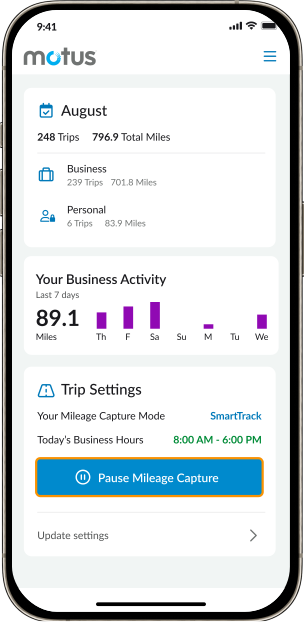
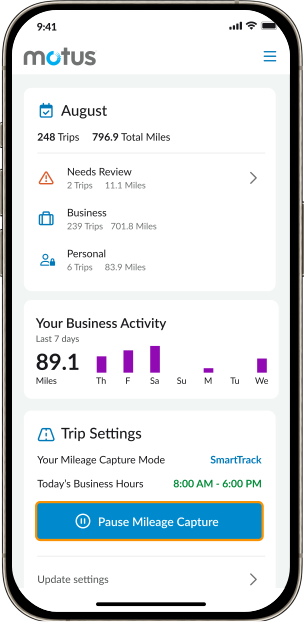
Landing Page: The final option involved setting up a landing page dashboard as the default screen when a user opens their app. This page provides a summary of all trip types, allowing users to navigate to filtered views. Additionally, the introduction of a dashboard would offer the flexibility to showcase any important functionality in the future. 
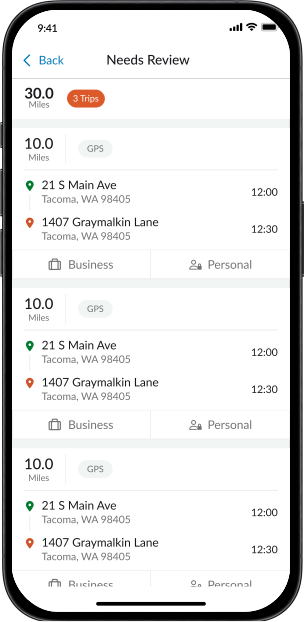
Separate Feed: Clicking on Needs Review takes the user to a separate section where they can see all trips that need classification.
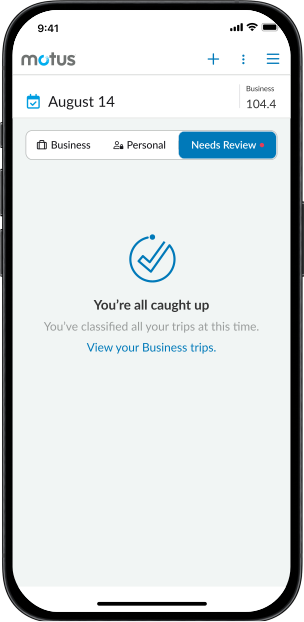
Completed Views: Once all trips are reviewed, the Needs Review section will disappear, and users will be prompted to explore all trips in either the Business or Personal feed.


Option 1: Add New Section to Side Nav

Design Highlights:

  • Dedicated Feed: Standalone section highlighting trips requiring attention.

  • Badge: indicator to clearly convey the count of trips requiring user review in the header and side nav

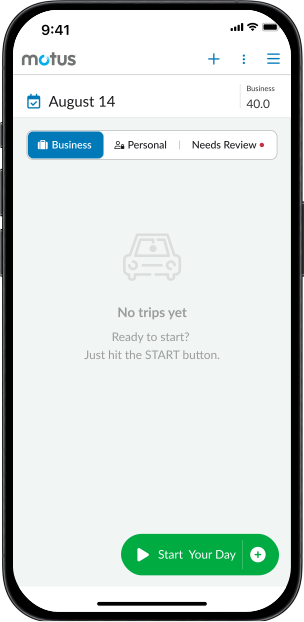
Option 2: Segmented Controls

Design Highlights:

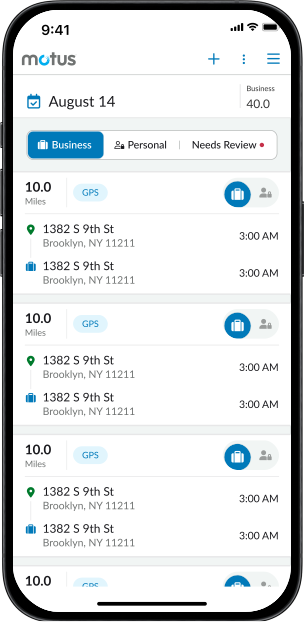
  • Segmented Controls: Filtered views for Needs Review, Business, and Personal.

  • Needs Review Indicator: When an unclassified trip is tracked, the Needs Review tab will display an orange indicator which exists in the app for other action-required sections.
Initiative 03. Needs Review Feed

When a user arrives at a new address that is not stored in Location Manager, the app will not be able to auto-classify the trip, requiring users to manually classify the trip. As a result, we needed to introduce a dedicated section in the app to draw attention to trips requiring user action. The visibility of this feed is essential for adoption of Auto Trip Classification and more accurate submission.

Option 1: Add New Section to Side Nav

Dedicated Feed: Our initial approach was to create a distinct feed, completely separate from the current home screen, to prominently feature trips that require user action.
Badge: Finally, we implemented an indicator with a badge to clearly convey the count of trips requiring user review. This badge was added to the header, and an identical one was incorporated into the sidebar, ensuring users are aware of the need for review and the corresponding quantity.

Option 3: Dashboard Landing Page


Option 3: Landing Page

Design Highlights:

  • Dashboard Landing Page: implementing a new home screen that provides dashboard with important statues beyond just Auto Classification, like relevant summaries or important app functionality

  • Separate Feed: Clicking on Needs Review takes the user to a separate section where they can see all trips that need classification.

  • Completed Views: Once all trips are reviewed, the Needs Review section will disappear, and users will be prompted to explore all trips in either the Business or Personal feed.

EXPERIMENTATION

EXPERIMENTATION

EXPERIMENTATION

To validate our design decisions, we conducted quantitative preference testing across our largest revenue clients from a wide range of industries. Participants completed classification tasks using three prototypes and ranked their experience.

KEY RESULTS

KEY RESULTS

KEY RESULTS

While the UI itself remained simple, the true innovation lay in designing for intelligenceunderstanding how to surface automation in a way that feels intuitive, supportive, and trustworthy.

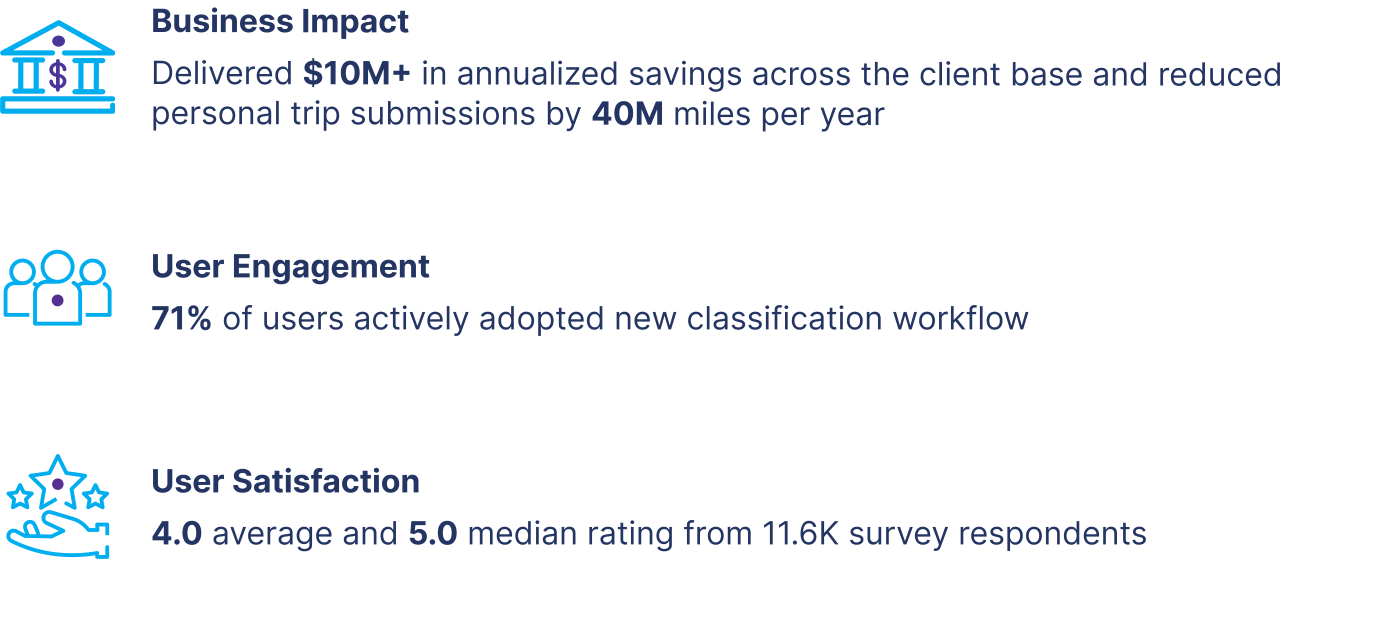
The results validated this approach: 71% of users actively engaged with the new classification workflow, 52% trusted the system enough to delete flagged trips, and customer satisfaction averaged 4.0 out of 5.0 across 11.6K survey respondents.

This project strengthened my perspective as a systems thinker and designer working with AI-driven experiences, where every design decision became an opportunity to make the model smarter. Through this work, we built more than a featurewe designed the foundation for a self-improving system that continuously evolves with its users, delivering over $10M in annual value while reducing personal trip submissions by 40M miles per year.
SAY ANNYEONG!